
Por El Tecladista | Agencia MABL
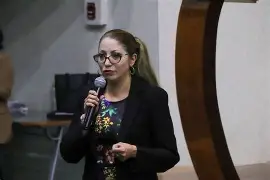
The release of a video highlighting the achievements of former Health Secretary of the State of Mexico, Macarena Montoya, raises questions about the political timing of her departure and the allegations of drug shortages in hospitals in the State of Mexico.
In politics, messages are rarely accidental.
And the video released by former Health Secretary of the State of Mexico, Macarena Montoya, just as she leaves office, doesn’t seem to be either.
The scene is unusual.
Most officials who leave a post simply depart quietly.
Without public assessments.
Without open farewells.
Without directly explaining to the public what was accomplished and what remains unfinished.
That’s why the video is noteworthy.
Organizing the Narrative
More than a spontaneous gesture of transparency, it seems like a carefully calculated message.
A mini digital report released precisely at the moment her departure from the Health Secretariat is announced.
In political terms, the movement has a clear purpose: to shape the narrative.
Because while the video highlights management achievements and institutional progress, citizen complaints about medicine shortages and hospital overcrowding continue to be heard.
Hospitals like the General Las Américas in Ecatepec, or the Gustavo Baz Prada in Tlalnepantla, have become examples of the strain the healthcare system faces in the country’s most populous state.
The reality of the system
The State of Mexico has more than 17 million inhabitants.
This places enormous pressure on any public healthcare system.
When a medical system serves a population of this size, institutional discourse rarely aligns completely with the daily experiences of its users.
And that’s where the political dimension of the message emerges.
The video doesn’t just seek to summarize a period of governance.
It also attempts to establish a particular interpretation of that governance.
In other words, to plant the idea of a successful conclusion before other actors can construct a different narrative.
In politics, whoever tells the story first usually has the advantage.
But in public health, assessments aren’t written solely in speeches or videos.
They’re written in hospitals, pharmacies, and waiting rooms where patients experience the reality of the system every day.
That’s why, more than an administrative closure, the video seems to be the beginning of a battle over the narrative.
Because when it comes to public health, the final word almost never belongs to the officials.
It belongs to the people.